
 Posted 27/02/2026 by admin
Running a busy commercial kitchen, convenience store, or food retail operation means relying on your fridge working like clockwork. And when it doesn’t, it doesn’t mess around-it just packs up at the worst possible moment, putting your stock at risk and bringing service to a grinding halt. But the good news is that most compressor problems do give you some clear warning signs if you know where to look.
This article will give you some simple, practical checks that you can run through in minutes – and they’re useful for any business owner or manager. They’ll help you spot compressor trouble before it becomes a costly emergency.
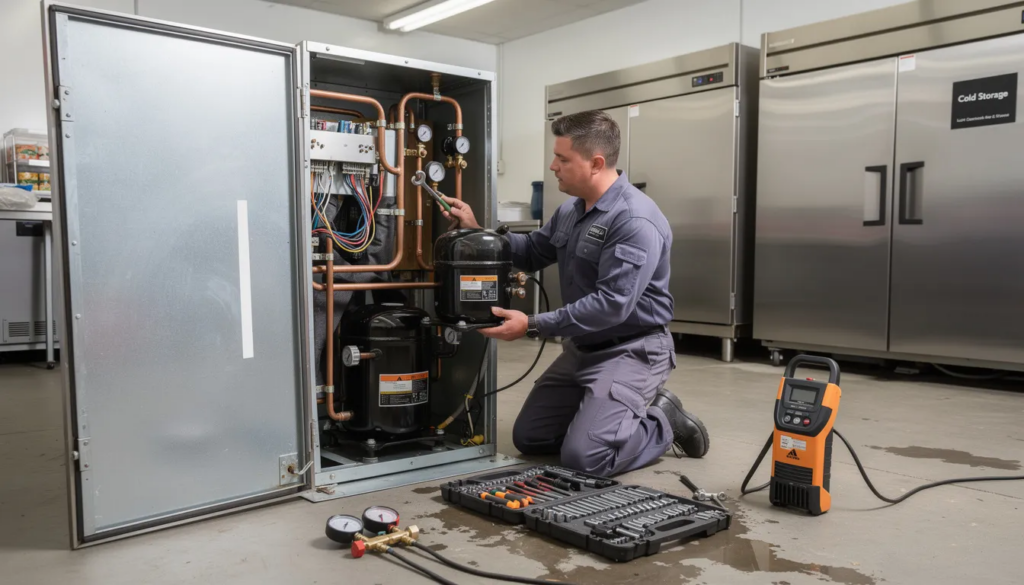
The compressor is effectively the engine of your commercial fridge – the bit that keeps your stock cold and safe. It’s usually tucked away at the back or underneath the cabinet, and it works pretty much non-stop. Understanding what it does will help explain why problems with this single component can bring your entire fridge to a standstill.
Simplistically, the compressor sucks in the low-pressure refrigerant vapour from inside the cabinet and squashes it into high-pressure, high-temperature gas. This hot gas then goes to the condenser coils and gets rid of the excess heat into the surrounding air. The refrigerant cools, melts into a liquid and passes through a special valve before getting to the evaporator inside the cabinet. There, it absorbs heat from your stock and the air around it, keeping the whole lot nice and chilly. The fan in the evaporator circulates cold air around your stock, and the whole process starts all over again.
When the compressor starts to get a bit dodgy, this whole cooling cycle starts to break down. And if you’re not on the ball, cabinet temperatures can rise from a safe zone of 2 °C to 10 °C to 15 °C or more in no time, putting food safety at serious risk. Most compressors are either the old-fashioned piston type or the newer scroll design, with variable-speed inverter models becoming more common nowadays.
Here’s the basic fridge cooling loop in a nutshell:
The main causes of compressor stress are pretty clear: running hot, contamination in the system, having the wrong refrigerant charge, poor airflow around the unit and electrical supply problems. So, understanding these stress factors is the first step towards stopping your compressor from giving up the ghost.
Most compressor failures are symptoms of other problems that just weren’t addressed in time. Chances are, the compressor itself didn’t just die of old age – it was more likely run under conditions it wasn’t designed for for months or years on end.
The root cause of compressor demise usually falls into one of a few categories: poor maintenance, dirty or blocked condenser coils, getting the wrong refrigerant charge, electrical faults, mechanical wear, and a defective installation or operating conditions to boot. Tackle the underlying issues, and most compressors will easily reach 10-12 years of reliable service. Ignore them, and you might see failure in under five years.
Whenever you do have to replace a compressor, a competent engineer should also investigate the cause of failure and fix it while they’re at it. Swapping the compressor without addressing issues like a failed fan motor, blocked airflow, or a chronic refrigerant leak is just setting yourself up for another expensive failure down the line.
Lack of regular cleaning and inspections is the single biggest reason commercial compressors fail prematurely. Many businesses have a “set it and forget it” attitude to their refrigeration equipment – they only pay attention when something goes wrong.
Common neglected tasks include never cleaning the condenser coils, ignoring small oil stains that indicate refrigerant leaks or failing to log cabinet temperatures regularly. Each of these oversights puts additional strain on the compressor. Running a dirty unit forces longer run times, higher operating temperatures and increased energy consumption until eventually the motor windings overheat or the bearings seize.
Consider a takeaway shop fridge that failed in five years – just because the condenser had never been cleaned, the filters were clogged with grease, and nobody noticed the gradually increasing cabinet temperatures. The compressor just gave up trying to cope with conditions it couldn’t handle.
Basic monthly checks by your staff will cut compressor failure rates dramatically – combined with twice-yearly professional servicing, that is. Dirty or Blocked Condenser Coils
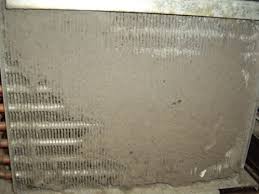
Dust and other crud just build up on the condenser coils and fan guards in places like pubs, cafes, and petrol stations. This mess pretty much insulates the system, stopping it from getting rid of heat as efficiently as it should be.
When your condenser coils get clogged, the compressor has to run hotter and longer just to achieve the same level of cooling you need. And the stats are pretty grim – industry data shows that dust can knock airflow back by 40 to 60%, and boost discharge pressure by 50 to 100 psi – with discharge temps creeping up over 120°C. As a result, motor winding insulation can start to break down fast.
Symptoms you might spot:
Keeping it clean: Give it a quick once-over each week, vacuum the fins if you can reach them monthly, and get a proper clean done by a pro at least twice a year. And yes, blocked coils are still the leading cause of compressor failure in commercial fridges.
Previous repairs or crudely brazed joints can leave the system undercharged. And then there’s the other end of the spectrum – overcharging. In either case, you’ve got a stressed-out compressor.
A low refrigerant charge is super tough on the compressor. It’s running pretty much non-stop, battling with low suction pressure. The compressor overheats internally, oil flow dwindles to nothing, and the internal components just start to fall apart fast.
Low charge can see compressor life cut in half.
Overcharged, it gets a different set of problems – slugging, where incompressible liquid enters the cylinders during flooded starts. Think compressor hammer effect – and it can bend those connecting rods or shatter the pistons in an instant.
Signs to spot without gauges:
F-gas qualified engineers only get to handle refrigerant checks and recharging. Guessing at the refrigerant charge without the right kit is more likely to cause problems than solve them.
You guessed it – poor electrics are a big reason compressors pack it in. Voltage drops, loose connections, dodgy start relays and weak capacitors can stop a compressor from starting at all, or cause it to keep tripping over and over.
A busted run capacitor, for example, prevents those new high-efficiency motors from starting up smoothly. Without the right oomph, the motor starts pulling excessive current, overheats, and kills itself repeatedly. Every time, the compressor just gets a bit more knackered.
And it gets worse with three-phase systems – even a tiny 2% to 3% deviation in voltage can cause uneven current draw – with specific motor windings getting cooked far beyond their design limits. Power surges from the grid or when starting can cause a single-phase motor to go pop.
Warning signs of electrical issues:
Users can eyeball burnt smells and discoloured wiring, but actual testing and replacing capacitors, the start relay, or other electrical components is best left to a qualified professional.
Even with perfect maintenance, compressors have a finite service life. Most compressors in commercial fridges are designed to last a good 8 to 12 years – roughly the same as the cabinet itself. That’s a lot of cycles.
Some wear and tear comes with the territory – pistons and valves lose efficiency, bearings wear, clearances increase – but internal components just take a hammering. Industry data suggests bearing faults come along at around 10,000 hours of operation, in many cases.
Later on, you might notice:
At this point, it’s just a cost-benefit decision – do you fit a new compressor to an old unit, or just go for a brand new energy-efficient fridge? On a 10-year-old cabinet with dodgy insulation and an old-type refrigerant, replacing the whole thing might just be the better option.
The trouble is, serious internal damage usually contaminates the whole system – and you’ll need to do a full clean and replace the filter-drier before installing a new compressor.
Manufacturers usually recommend minimum clearances of 50mm to 100mm at the back and sides, and even more space is needed for bigger units with top-mounted condensers. Ignore these rules, and you’re restricting airflow around the condenser, forcing up operating pressures, and cutting short the compressor life.
Hot, greasy kitchens pose an extra set of challenges. Ambient temperatures rising above 30 degrees can send the motor current soaring by 15% to 20%. Grease in the air clogs up condensers more quickly than in cleaner environments, making things even worse.
Siting checklist for commercial fridges:
Factor Recommendation Distance from heat sources
Pick your fridges away from cooklines, ovens, and direct sunlight
Rear clearance
Make sure you’ve got at least 50-100mm of space at the back for airflow
Side clearance
Leave at least 50mm, and a bit more if you’ve got a bigger unit
Floor condition
Make sure the floor is level and stable – you don’t want your fridge vibrating all over the shop
Surrounding storage
And for goodness sake – leave the grills clear of boxes and stock
Vibration from uneven floors or moving a unit around a lot can loosen pipework and contribute to refrigerant leaks, which is bad news for the compressor over time.
Early warning signs your commercial fridge compressor is on the way out
Most of the time, spotting trouble early means a quick and easy fix instead of having to replace the whole compressor. Most compressors will give you plenty of warning signs before they finally pack up – the trick is knowing what to look and listen for.
Warning signs tend to fall into a few different categories: temperature dips, noise changes, unusual running patterns, a lot of heat building up around the compressor, and sudden increases in energy consumption. If any of these pop up on their own, it’s worth investigating further. But if you start to see a pattern – say you notice the compressor is making a funny noise and the fridge is running hot and steadily losing its cool – that’s a sign you need to get a refrigeration engineer out there, pronto.
A typical scenario: A display fridge in a café slowly but surely loses performance over a few weeks. Temperatures creep up, the compressor is working overtime, and staff start to notice that the unit is sounding different. And then one morning, the compressor trips and refuses to restart – and suddenly the whole cabinet of stock is in danger.
A healthy compressor makes a gentle humming noise, about 50 to 60 Hz. Any change in the noise level or pitch will usually mean something is going wrong mechanically or electrically.
Common strange noises and possible causes:
An electrical overload or a failing capacitor
The start relay or overload is getting stuck in a loop
Loose mounting or internal damage
Bearing wear or debris in the system
Loose components or flooded starts
Knocking sounds can be a sign of loose mounting bolts – an easy fix – or something much more serious like internal damage. Clicking, on the other hand, is usually a sign that the start relay or capacitor is playing up.
Staff can help by carefully clearing a path to the air vents, listening in briefly with the doors closed, and recording what they hear for the engineer. Don’t just ignore strange noises – they usually get worse over time before the compressor finally packs up.
A compressor that’s starting to go may still work, but struggle to keep the fridge at a safe temperature – especially in hot weather or when you’re getting a lot of stock in.
Target temperature ranges for chilled storage:
-1°C to +5°C
0°C to 5°C
1°C and 4°C
Warning patterns include temperatures slowly creeping up, or the fridge taking ages to get back down to the set temperature after you’ve opened the door or restocked. Digital temperature logs and monitoring systems are a lifesaver when it comes to spotting trouble early.
If your fridge consistently runs above the legal temperature limits or is just getting on in life, it’s a food safety issue, and you need to get a professional in, pronto.
Normal compressor operation is all about cycling on and off, with the running periods balanced against the downtime. But if things are going wrong, you’ll see two different patterns:
Longer run times see the compressor working almost constantly, instead of cycling like normal. This is a surefire sign that something is amiss – maybe the system is low on refrigerant, or maybe something is clogged up.
Short cycling see the compressor starting and stopping every minute or two, often with a clicking sound from the start relay. This is a surefire way to wear the motor out and just makes things even worse.
Both of these patterns put a lot of extra wear on the compressor, increase the energy bill and generally just make things a lot more likely to go wrong. If your compressor is spending a lot more time on than off, or vice versa, something is wrong.### Excessive Heat Around the Compressor – Something’s Not Right
You can usually get a pretty good idea of what’s going on just by running your hand close to the compressor and condenser areas. The condenser will always be a bit warm – that’s just its job is to get rid of heat from inside the cabinet. But if you notice any of the following, then you’ve got cause for concern: panels scorching hot to the touch, warm air pouring out of the back grills or just a general hot smell going on. Seriously, that’s a major stress trigger.
What’s probably causing it in most cases is dirty coils, bad airflow or a fan motor that’s gone south, which forces the compressor to work with the pressure of a mountain. When you do notice something’s amiss, take a walk around the site and make sure there aren’t any cardboard boxes or storage crates blocking airflow. You can count on thermal stress from chronic overheating to knock out motor insulation, and it’s all downhill from there, and the compressor is irreparably toast if its casing gets too hot to touch. You want to get an engineer in there before that happens.
If you’ve got submetering or smart energy monitoring on the go, then you can check for problems just by looking at the numbers. A compressor that’s failing, or a dirty condenser, or a low refrigerant charge can all start gobbling up a lot of extra kilowatt-hours in a single month. You need to compare same time periods from year to year – June 2023 versus June 2024, for instance – to see if there are any compressor-related inefficiencies at play. The thing is, efficiency drops when the system has to work harder to get the same cooling job done.
Now, catching these inefficiencies early can pay dividends when it comes to saving on the electricity bills. And if you’re seeing energy spikes combined with other symptoms like noise, poor cooling or just general heat, then you know you’ve got a serious, developing compressor problem on your hands that needs some serious attention.
You can try running through a few basic checks before booking that call-out. Nothing too technical, just a non-technical checklist to rule out the obvious. And don’t worry, you don’t need to get your hands dirty or open up the sealed refrigerant system or anything like that.
Safety First : Unplug the unit before cleaning coils, and don’t even think about touching any of the electrical components without proper training. You shouldn’t even think about piercing or disconnecting or tampering with the refrigerant pipework – that’s just a recipe for disaster and illegal on top of it.
If you do these basic checks and nothing resolves itself within 24 hours, then it’s time to cut your losses and call a refrigeration specialist in. Don’t be tempted to try and muck about yourself – running a unit that’s on the fritz risks complete compressor burnout and stock loss.
Double check that the digital controller or thermostat is set to the right range – maybe the staff have accidentally knocked it out of whack or something. Make sure the cabinet isn’t overloaded or stuffed tight against the walls – that can create its own airflow problems.
And please, for the love of all things good, don’t stick hot food straight into the fridge expecting it to cool down super fast – that just causes the compressor to run for ages and ages and might even trigger false alarms.
If temperatures remain dodgy despite all this, then it’s likely you’ve got deeper system issues to deal with.
Take a good, hard look at the door gaskets and seals. Are they cracked or falling apart? Damaged door seals are letting warm air and moisture in and making the compressor work way harder than it needs to.
There’s a simple test you can do: try to slip a piece of paper into the gap between the door and frame at a few different points. If it slips out easily, then the seal is failing, and you’ll need to replace it.
Make sure there are no blockages in the vents inside the cabinet, especially near the fan cover. Poor airflow can cause ice to build up on the coils and the defrost system to malfunction.
And while you’re at it, check that nothing is blocking the grills and vents on the outside, either.
Isolate the unit from the mains and then give the condenser a good old clean. Use mild detergent and soft brushes – don’t even think about using harsh chemicals or high-pressure water that might bend the delicate fins. A good rule of thumb is if you can write your name in the dust, then the compressor has been working too hard for far too long.
After you’ve done your cleaning, keep an eye on temperatures and run times for a 24-hour period and see if things improve. If you notice they do, then it’s probably just a dirty coil causing the problem.
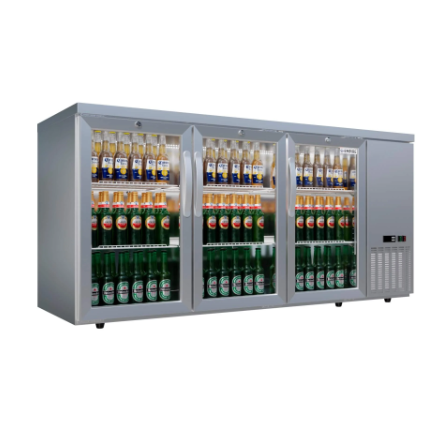
There are certain signs that just shout out for a professional. If you’re seeing any of the following, then you need to give the call-out to the engineer pronto :
Before the engineer shows up, do them a solid and prepare some valuable information: the model and serial number of the unit, how old it is, its service history, if that’s available, and a timeline of when the symptoms started. That stuff really helps get the diagnosis on track and makes sure the fix is the right one.
A competent engineer is going to do a systematic check to figure out if the compressor is the culprit or if something else is causing the problem.
Standard checks usually include:
Test
Purpose
Voltage & current checks
Make sure the power supply is okay, and the motor is drawing the right amount of current
Check the capacitor & relay to see if they’re doing their job
Have a look at the starting components – are they working right?
Check the winding resistance – is it all good in there?
Make sure the motor insulation isn’t breaking down
Check the suction & discharge pressures – are they where they should be?
Check the temperature of the pipework – is the refrigerant flowing properly?
Use an electronic sniffer or a nitrogen pressure test
If the engineer suspects the compressor has gone bang internally, they might also check and replace the filter-drier and flush the refrigerant lines to get rid of any debris or contaminated oil before putting in a new compressor
A proper diagnostic visit should end with a clear written report and a couple of options that you can choose from – that way, you can make an informed decision
When a compressor fails, you’ve got three main choices: fix the odd electrical parts, replace the compressor, or bin the whole unit and get a new one.
Things to consider:
Take a 2012 multideck display in a supermarket, for example. The compressor has gone, the insulation is shot, the door seals are worn, and it’s using an old refrigerant that’s being phased out. Replacing the compressor might cost a bomb, but it’ll only give you a few more years of dodgy service. Getting a new unit is a better bet – it’ll be more efficient, have better temperature stability and come with a warranty
A good engineer should explain the pros and cons clearly, not just tell you to go for the most expensive option. Get a few quotes from different engineers covering repair, compressor replacement, and a new unit, including what the running costs are going to be over the next five years.
Prevention is much cheaper than having to replace the compressor when it fails and then dealing with all the food that’s gone off. Industry figures suggest that repair costs can run from £150 to £300 for compressor problems, while replacing the compressor can cost over £500 – and that’s before you even think about lost stock
Divide up the maintenance tasks between what the staff do day to day and what the engineer does on their scheduled visits. Draw up a simple schedule with clear responsibilities and specific frequencies rather than just telling people to “check it periodically”
Well-maintained units are also a big help when it comes to food safety regulations, HACCP requirements, and temperature recording obligations. Your maintenance log is a great way to show due diligence if the inspectors come poking around.
Your staff should do some straightforward checks to catch any problems early:
Daily tasks:
Weekly tasks:
If your staff spot anything out of the ordinary, they should report it and log it: icing on the coils, slow temperature recovery after deliveries, repeated alarm messages, or any change in the compressor sound. Show your new staff where the condenser is and what healthy operation looks and sounds like.
A lot of compressor failures are preceded by weeks of ignored minor symptoms. If your staff don’t report them, you won’t know there’s a problem until it’s too late.
Schedule professional servicing at least twice a year for most commercial sites. If you’ve got a kitchen that’s in heavy use, or you’re in a hot environment, or you’ve got a critical application, you might need to do it more often – maybe even quarterly
Good planned maintenance should include:
Proper servicing often catches loose electrical connections, worn fan motors or developing refrigerant leaks before they damage the compressor. The service report should document the compressor condition, any measured parameters, and any trends you’ve observed.
Regular maintenance will help extend the life of both the compressor and the whole cabinet, so you won’t be looking at expensive replacement for years to come
Keeping a log of temperatures, alarm events, service visits, and energy consumption will help you spot slow-developing compressor issues before they become a big problem. Digital monitoring solutions really come into their own for bigger operations with multiple sites or large cold rooms, giving you a continuous data feed and automatic alerts whenever things drift outside of what’s acceptable.
Examples of Trend-Based Detection:
By sharing the logs with the service engineers, it really does speed up the whole diagnostic process and improves the accuracy of their repair decisions. Rather than having to rely on memory, you can actually show them the actual data on how performance has changed.
Trend monitoring essentially turns unexpected compressor failures from big bills into planned maintenance, which saves a lot of stress.
The following questions cover some of the most common compressor-related queries that aren’t fully covered in the main article, which is bound to be a huge help to business owners and managers who want to get the most out of their fridge systems.
In normal UK catering or retail use, a well-looked-after compressor will typically see out 8 or 12 years, roughly matching the design life of the fridge. On the other hand, heavy-duty use, hot operating environments, and poor maintenance can cut that down to 5 or 7 years. And in some cases, light-duty systems that are well-maintained may actually go on to exceed 12 years.
If you’re getting repeated early failures that don’t seem to be just bad luck, it’s often a sign of underlying issues like poor ventilation, electrical problems or chronic refrigerant leaks. And if the compressor lets you down in under five years, take a long, hard look at your maintenance practices and operating conditions – manufacturers will often publish expected service life ranges in their technical documentation, which can give you a good guideline for when it might be time to replace.
The risks of running a suspect compressor are real – and they include the compressor giving up completely, causing food to go off, or even damaging other system components. If the temperature’s already outside safe limits, the compressor is making a weird noise or circuit breakers keep tripping, take the unit out of service right away.
If it’s a borderline case and the compressor just sounds a bit dodgy but the fridge is still cooling okay, at the very least, move all your high-risk stock, like raw meat and dairy to a known-good unit. And if that’s not possible, call in a refrigeration engineer as soon as you can, rather than waiting for it to completely fail in the middle of a busy service period. From a food safety standpoint, using equipment that can’t reliably keep things at a safe temperature is never an option.
Yes, compressors can usually be swapped out on commercial fridges – but whether it’s the best thing to do is another question. You need to weigh up the age of the fridge, its energy efficiency, the condition of the insulation, whether the door seal is still good and any other issues it’s had in the past before deciding.
Putting a brand-new compressor in a fridge that’s 10 years old with lots of other problems is unlikely to add much more than a few years to its life – and may even be money down the drain in the long run. If the unit’s got multiple issues, the cost of buying a new, efficient one may be the way to go in the end. Ask around for some quotes and energy estimates to help you make up your mind.
That’s a pretty common problem – and usually it’s a sign of a start relay fault, capacitor issues, control problems or a big refrigerant charge error. Each time the compressor starts, it puts a lot of strain on the motor – and frequent cycling can cause long-term damage pretty quickly.
You might hear a lot of clicking coming from the control compartment as the overload trips and resets. That’s not something you can sort out yourself, either – you need to get a professional in as soon as you can to diagnose the problem and do the necessary repairs to stop it from causing further damage. Until that’s sorted, move all your critical stock to another unit that can keep things at a stable temperature.
In most cases, a replacement compressor should be designed to work with the same type of refrigerant as the original one. But switching refrigerant types is possible – it just means you’ll need to swap out the expansion devices, choose a compatible lubricating oil and re-rate all the other system components, which can be a real hassle and a lot more expensive. Environmental regulations may mean it’s worth considering a full system upgrade rather than replacing the compressor alone. Have a chat with your refrigeration engineer before you do any major work – using the wrong refrigerant or incompatible oil can quickly damage a new compressor and void any warranty.


Office: 0207 8709645


Leave a comment
You must be logged in to post a comment.